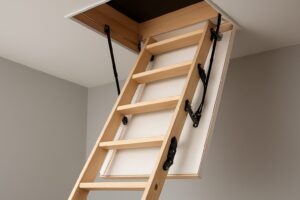
Loft ladders see constant use, yet many homeowners rarely stop to consider whether theirs meets basic safety standards. A properly installed wooden loft ladder should feel stable underfoot, support its rated weight without flexing, and sit at an angle that doesn’t strain your back or knees. Before loading boxes or climbing up for seasonal storage, it’s worth asking a few important questions about stability, weight limits, and building compliance.
What angle should a loft ladder sit at for safe use?
Most wooden loft ladders perform best between 60 and 70 degrees from the floor. Anything steeper starts to feel like a vertical climb, increasing strain on your arms and shoulders. Anything shallower takes up more floor space and can make the ladder feel unstable at the top. Check your installation against this range, and adjust the hinge or mounting bracket if the current angle feels uncomfortable.
Do wooden loft ladders need handrails?
Handrails aren’t always mandatory for domestic loft ladders, but they make a noticeable difference in comfort and confidence, especially for older users or anyone carrying items. If your loft is used regularly rather than for occasional storage, adding a rail near the top landing is a simple upgrade worth considering.
How do I know if the footing is stable?
Stable footing starts with a firm, level base. Rubber feet or non-slip pads help prevent sliding, particularly on tiled or polished flooring. Give the ladder a firm push test from the bottom rung before climbing, and tighten any loose fixings you notice.
How can I check the weight rating of my ladder?
Every wooden loft ladder comes with a maximum load rating set by the manufacturer. This figure accounts for your body weight plus anything you’re carrying, such as storage boxes or tools. Exceeding this limit, even briefly, puts unnecessary stress on the frame and hinges. If you can’t locate the original specification, a qualified installer can inspect the ladder and confirm a safe working load.
What about the loft hatch itself?
The hatch frame should close flush and securely, without gaps that let draughts or pests through. A hatch that doesn’t sit properly can also signal a misaligned ladder mechanism, which affects overall stability.
Are there building regulations for loft ladders?
Local building rules often address fire escape routes, headroom clearance, and structural support for converted lofts. Requirements vary by region, so checking with your local building authority before installation helps avoid costly adjustments later.
When should I hire a professional instead of a DIY approach?
If your loft is part of a conversion, involves structural changes, or you’re unsure about load-bearing points, hiring a qualified installer is the safer route. Professionals can also advise on handrail placement and confirm your ladder meets regional safety codes, giving you peace of mind every time you climb.
Key Points
- A properly installed wooden loft ladder should sit at an angle between 60 and 70 degrees from the floor for safe use.
- Handrails are not mandatory for domestic loft ladders but significantly increase comfort and confidence, particularly for older users.
- Stable footing for a loft ladder begins with a firm, level base and can be enhanced with rubber feet or non-slip pads.
- Every wooden loft ladder has a maximum load rating set by the manufacturer, which should not be exceeded to avoid stressing the frame and hinges.
- Local building regulations may address aspects such as fire escape routes and headroom clearance, making it essential to consult with local authorities before installation.
- Hiring a qualified installer is recommended if structural changes are involved or if there is uncertainty about load-bearing points.